
Spaceium Inc: In-Space Refueling
Spaceium builds fully automated space stations to refuel and repair spacecraft. The company has secured $86.1 million in binding commercial contracts, with an additional $230 million in the pipeline and 1 billion dollars in letters of intent. Hardware has been successfully tested and will launch to space next year.
Technology
Spaceium's fully automated space stations efficiently store and transfer both cryogenic (extremely cold) and non-cryogenic fuels with zero loss during storage and transfer. A proprietary modular robotic arm transfers fuel seamlessly to any spacecraft design.
Zero Boil Off (ZBO) Technology
The cryogenic fuel storage and transfer technology is designed to store fuel without any boil-off for multiple years in space. Two fundamental principles guide the system:
- Heat prevention through unique tank design, insulation, and coating
- Innovative multistage closed-loop cooling system that evenly removes heat from cryogenic fuel and transfers it to radiators
The cooling system is 65% more efficient than any other cooling system, and the scalable storage system can store up to 30 metric tons of fuel.
Multifunction Robotic Arm
The robotic arm securely docks with incoming spacecraft and initiates fuel transfer. A built-in fluid system allows transfer of different fuel types, while a thermal system ensures fuel is transferred at the correct temperature without boil-off issues. The arm is equipped with an interchangeable end effector designed for in-space repairs, retrieving tools from a stored toolbox within the system.
The Problem
Spacecraft face significant challenges due to the inability to refuel or repair in orbit. An overwhelming 85–95% of launch weight is fuel on a typical launch vehicle, with 80–90% burned off to reach orbit. As a result, spacecraft that transport loads in space can only perform, on average, 25% as many missions as they're technically capable of due to the absence of refueling in space.
Cryogenic fuels such as liquid oxygen, methane, and liquid hydrogen must be stored and transferred at extremely low temperatures of −285°F. Environmental factors in space, such as heat and radiation, increase fuel temperature, causing boil-off.
There is currently no solution for spacecraft repair. Spacecraft must operate flawlessly to maximize efficiency, which is not always the case. For example, Eutelsat Communications' satellites experienced power loss mid-mission with no option for repair, resulting in a $30 million revenue loss.
Who Can Benefit
- Launch vehicles
- Orbital transfer vehicles
- Space tugs
- Moon landers
- Satellites
Vision
Spaceium aims to launch servicing stations in Low Earth Orbit in 2025 and expand to Geostationary Orbit, the Moon, and Mars by 2030. The long-term vision is to build service hubs along the space superhighway to connect Earth to Moon and Mars and help humanity become a multiplanetary species.
The Team

Ashi Dissanayake, Co-Founder & CEO
Aerospace Engineer specializing in orbital mechanics and rocket propulsion systems. Ashi has worked on aerodynamic models for NASA and built models for interplanetary transfers for an unmanned return mission to an asteroid in real time. Previously built rocket engines, payload structures, and recovery systems.

Reza Fetanat, Co-Founder & CTO
Mechanical Engineer specializing in robotics, structures, and cryogenics. Reza led a rocket program at university, successfully launching 3 rockets and becoming the fastest growing team. Fully developed 4 rocket engines and built a propulsion stability model. Built many robots including a rocket tracker for recovery.
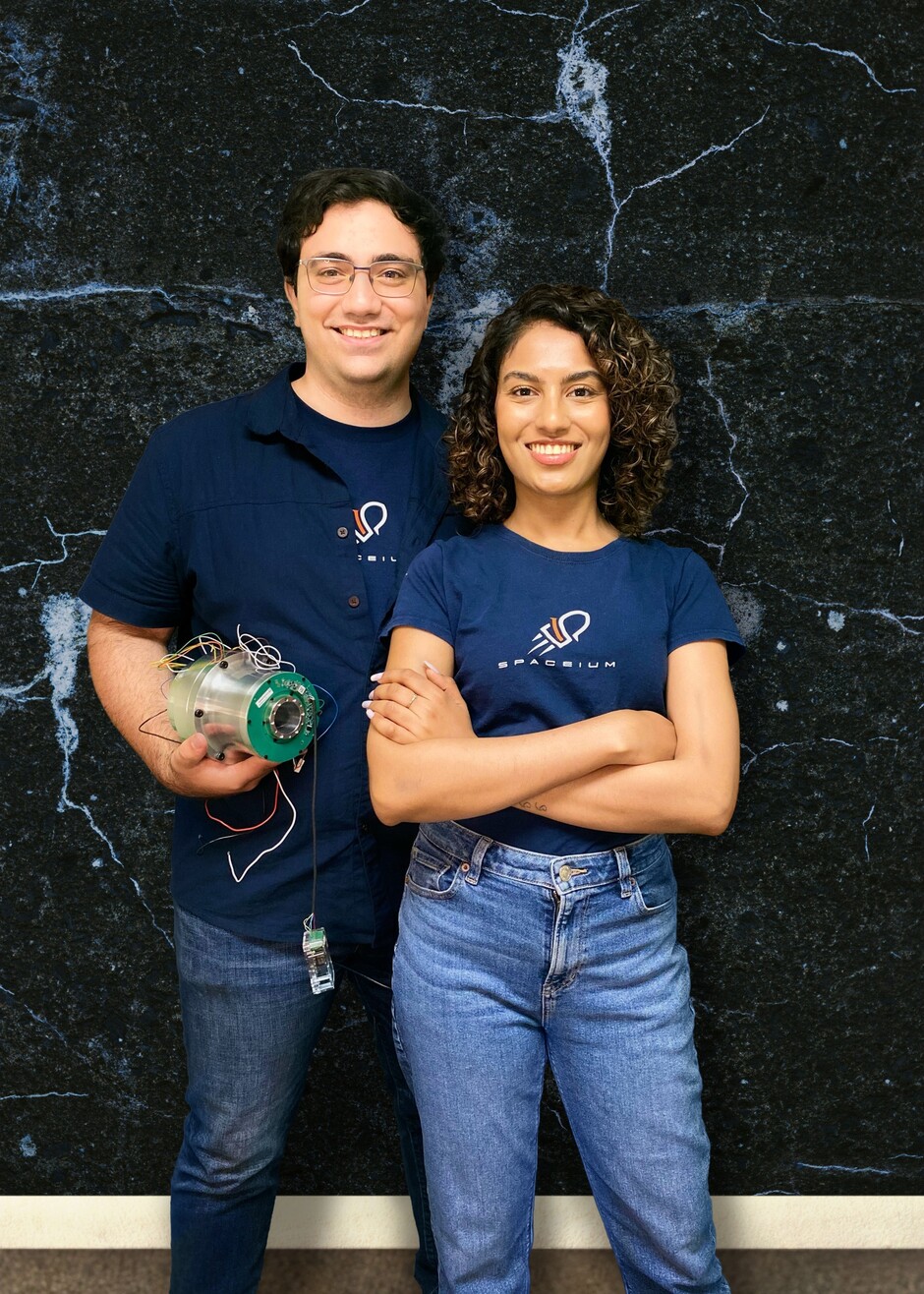
Ashi and Reza first met while leading the University of Ottawa's rocketry team, where they built high-powered rockets to send scientific payloads to different altitudes. Throughout their careers, they've noticed the constraints on space missions due to the lack of ability to refuel or repair spacecraft in orbit. They founded Spaceium to build the missing piece of space infrastructure that connects the space superhighway, just like how service stations were built on Earth.
Get in Touch
For feedback, comments, questions, or to learn how Spaceium can help with your missions, email founders@spaceium.com.
If you know or work with launch providers, space companies, or satellite providers who could benefit from Spaceium's service, please introduce the team. Follow Spaceium on LinkedIn and X for updates.